
A Monument for the Boy I Lost My Virginity To
Installation
Ernest G. Welch School of Art & Design Gallery, Atlanta, Georgia, United States
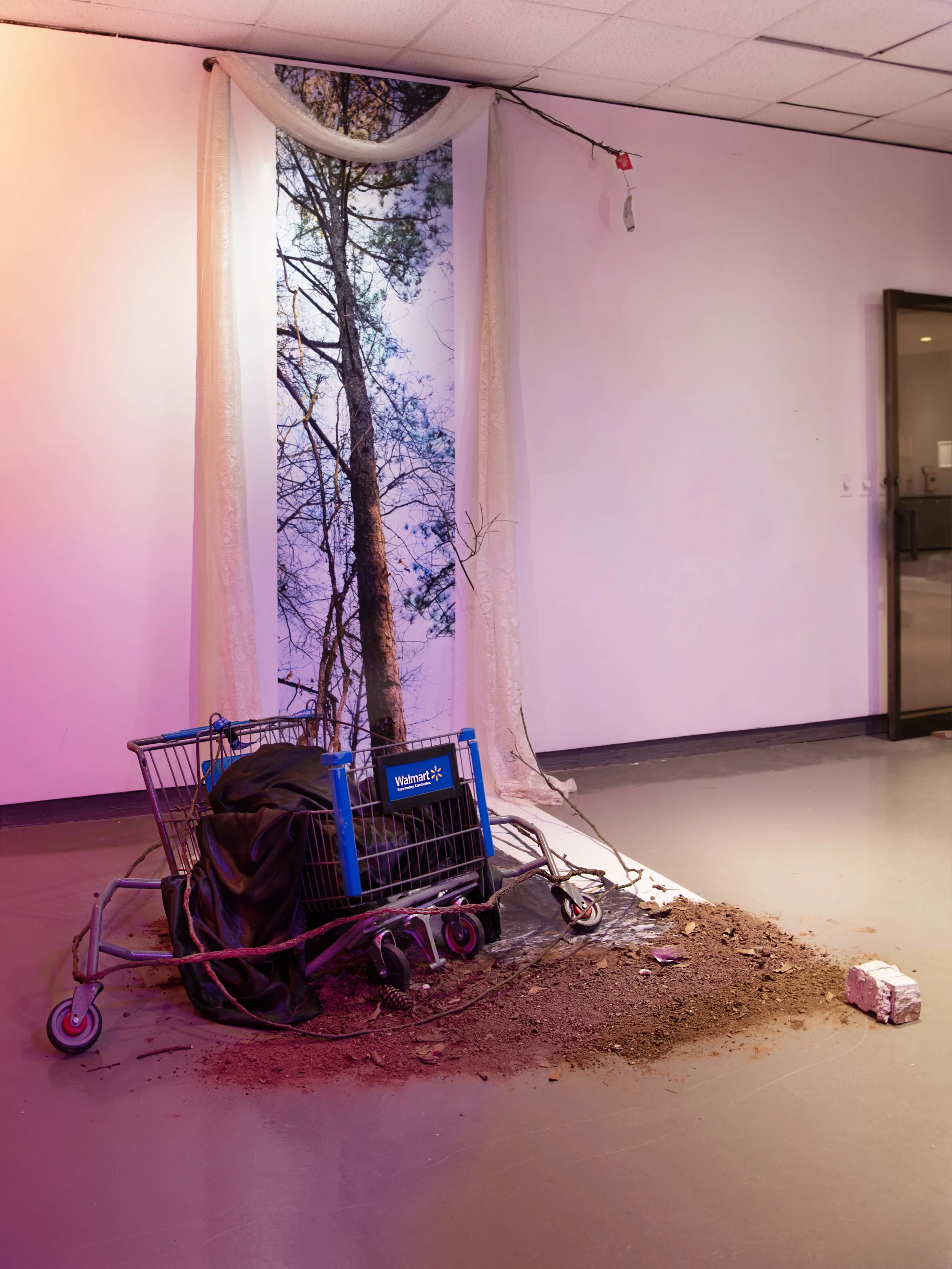
A Monument for the Boy I Lost My Virginity To centers on a formative and deeply unsettling memory for the artist, tracing how desire, coercion, devotion, and shame can become tangled together. It is a shrine around an experience that once felt inevitable, even romantic, while gently exposing how longing can be shaped by belief, power, and submission.
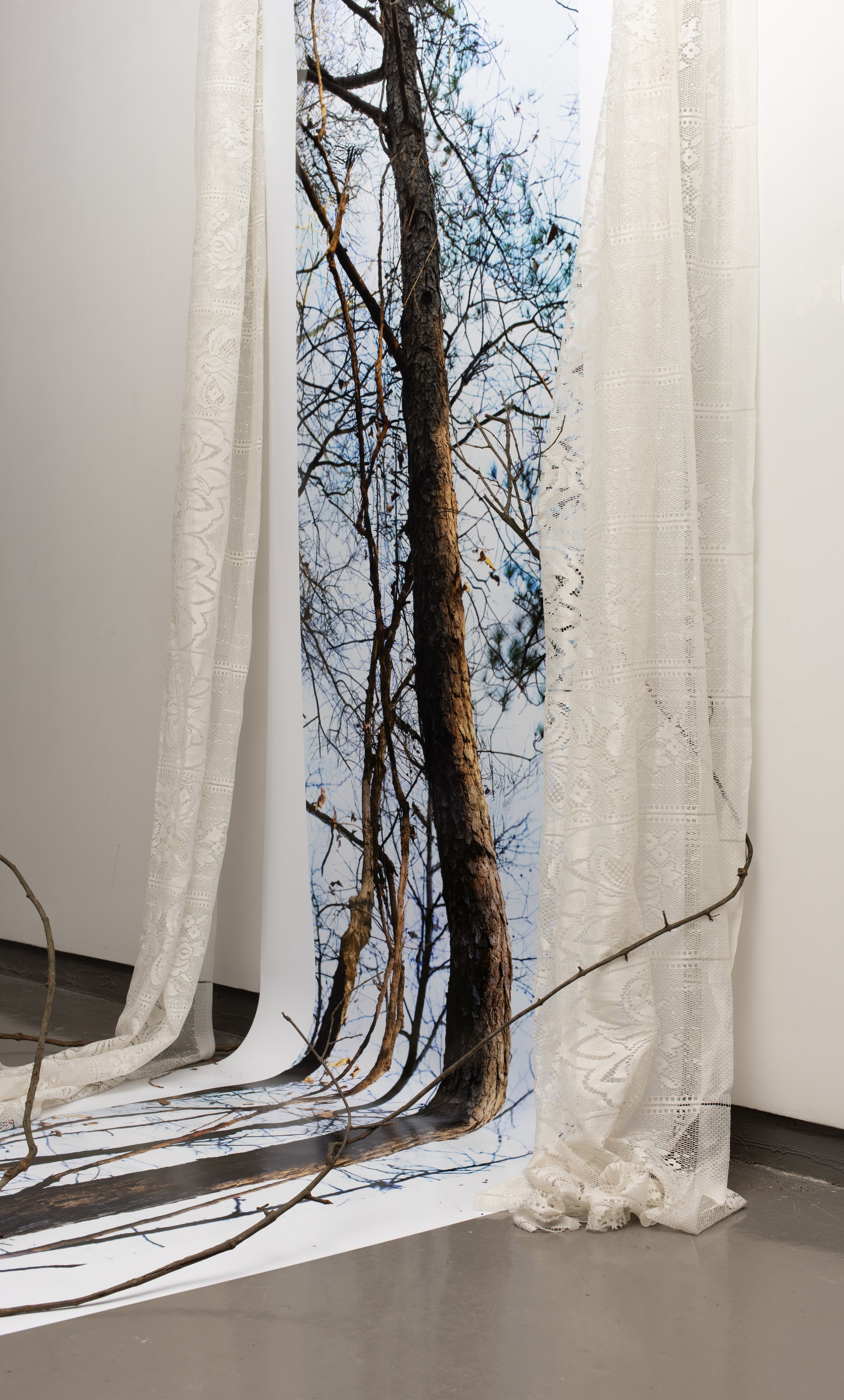
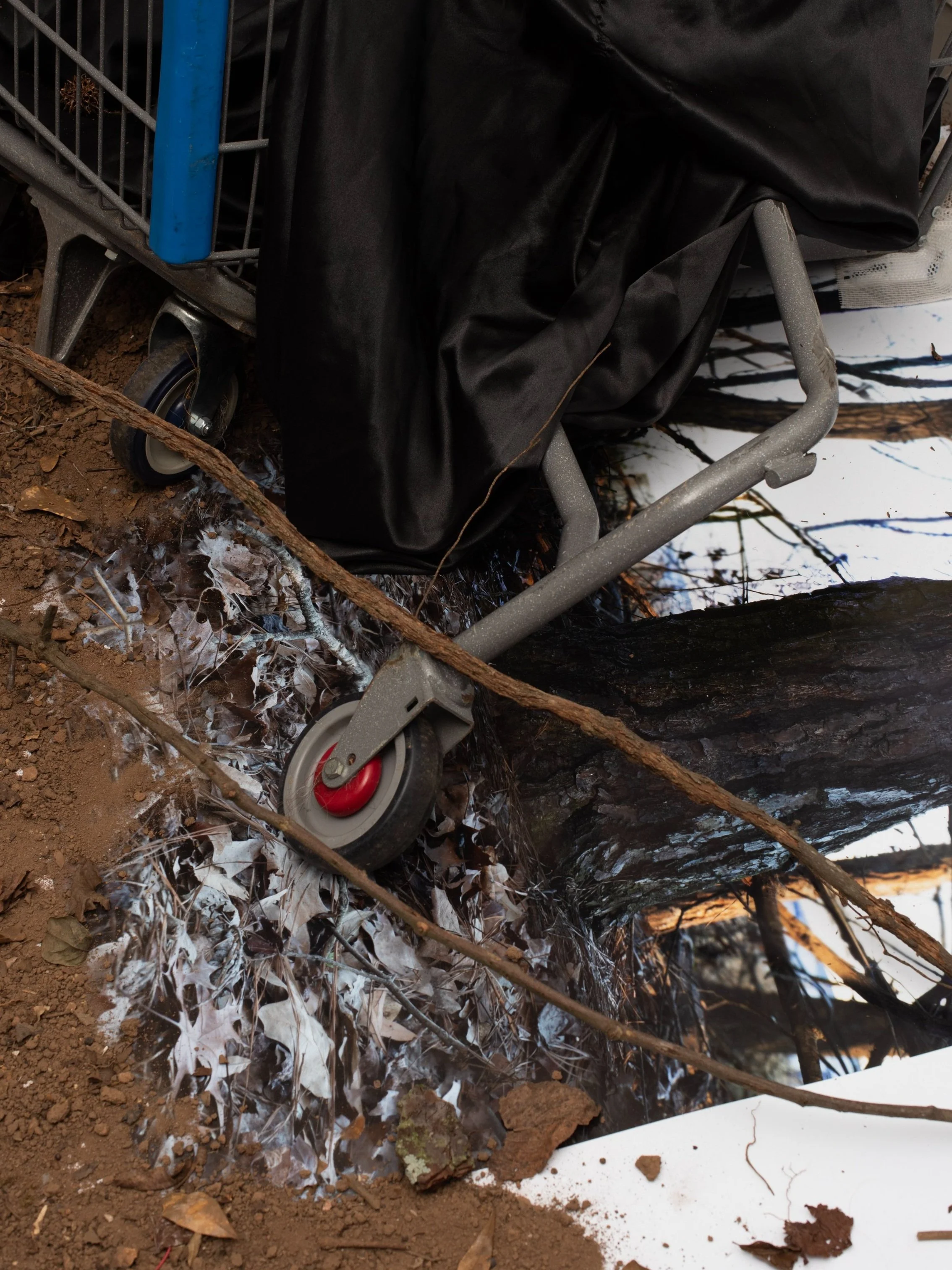
The installation brings together dirt and debris gathered from the original site, a stolen Walmart cart, satin, lace, and a large photographic image of the tree where the artist laid when they lost their virginity. These materials ground the work in a specific place, folding memory, object, and environment into one another until they’re hard to separate.
Within Three Tries: The Beginning, the piece sits inside a larger structure that draws on both the Stations of the Cross and Freud’s psychosexual stages. It aligns with the latency stage, a period often described as a time of suppression and quiet structuring of sexuality. Here, that framework begins to come undone, acknowledging that the experience was not only premature, but marked by a sense of submission and unwantedness. Rather than remaining dormant, it shows how sexuality can emerge too early, taking shape within and despite the systems meant to contain, delay, or deny it.
The work is large in scale, but its details feel intimate and close. It lingers on how memories of sexual beginnings settle in and stay with us, attaching themselves to places, objects, and the body. Over time, those elements become inseparable. Personal history isn’t just remembered, it’s carried forward, shaped by where it happened and how it continues to live on.
In the end, A Monument for the Boy I Lost My Virginity To holds the altar in a complicated, unsettled space. It becomes a site of mourning, but also a quiet form of accusation, refusing to let the experience be remembered as only tender or inevitable. Instead, it stays with the contradiction, where gestures of care and devotion are entangled with harm.
The altar doesn’t offer resolution or closure. It lingers in that tension, asking what it means to grieve something that was never fully wanted, yet still deeply formative. In doing so, it holds space for both acknowledgment and confrontation, allowing the work to exist as both a memorial and a reckoning.
Photography by Ross Landenberger and Getsay.