

Untouched
Performance / Installation / Video
Atlanta, Georgia, United States
Untouched examines the nonbinary body as evidence, traced through material residue, damage, and photographic inscription. The work situates the body within a field of remnants, where presence is registered through what remains rather than what is directly shown, while confronting the historical frameworks through which gender is read and assigned.
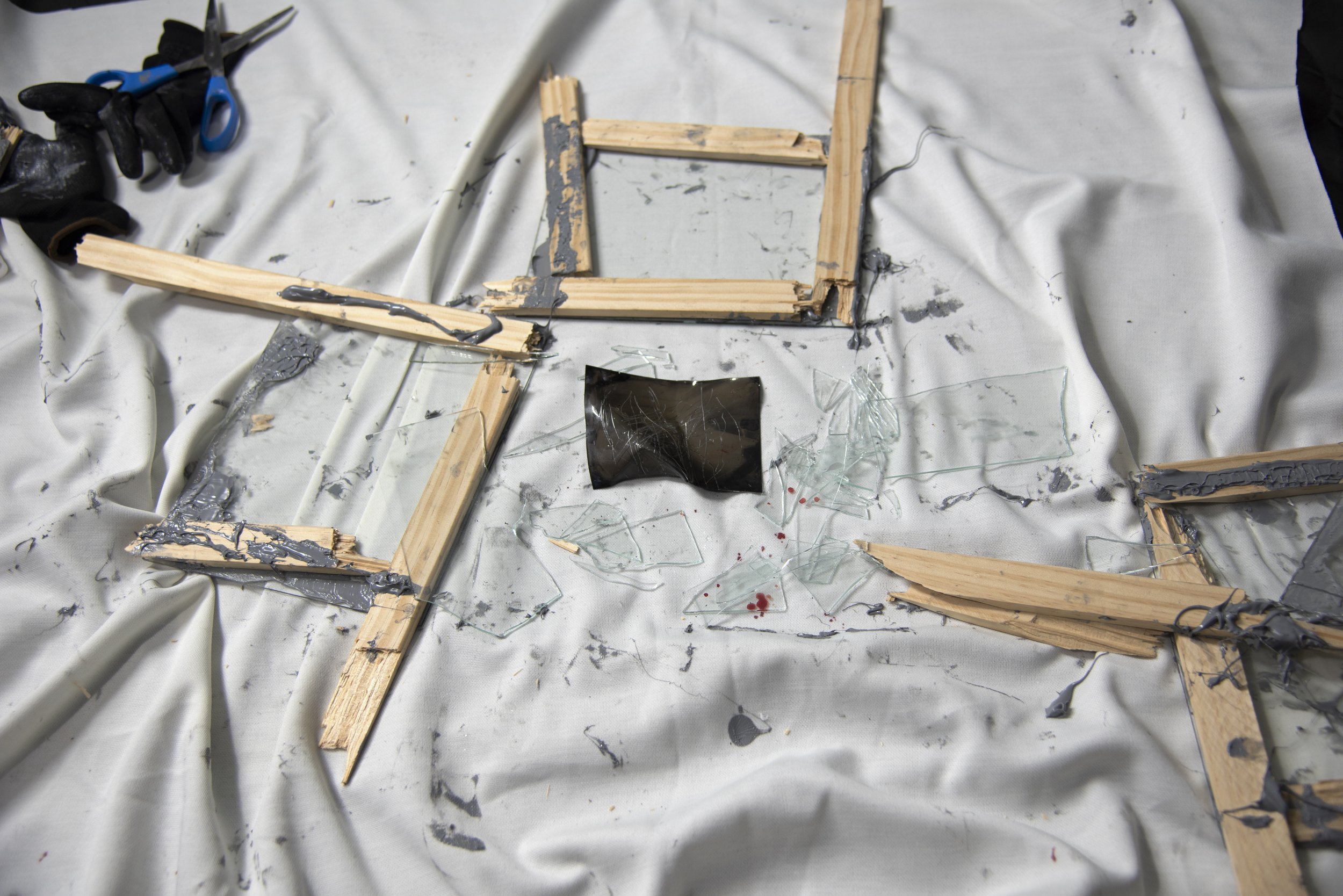
The installation combines a single-channel video projection with a sculptural environment composed of broken glass, altered tools, and organic fragments. These materials function as both remnants and instruments, indexing actions that have occurred but are not fully visible.
At the center of the work is a wet plate collodion tintype image of the artist’s body, captured from the waist down using a Graflex 4x5 Speed Camera. The use of this archaic photographic process references the historical construction of gender as fixed and legible, embedding the body within a system that predates and reinforces binary interpretation.
Within the performance, the artist constructs a poorly made box around the image, attempting to contain and define it. After assembling the structure, the artist lingers in observation before becoming overwhelmed with anger, destroying the box and attempting to destroy the image itself. The image resists destruction, and in the process, the artist causes harm to their own body.
This action foregrounds the impossibility of fully dismantling the gender binary, revealing how deeply it is embedded within both material systems and embodied experience. The work stages a confrontation between the desire to deconstruct imposed identity and the persistence of the structures that enforce it.
Physical materials, including the artist’s DNA, are embedded throughout the installation, collapsing distinctions between body, image, and object.
Untouched positions the body as both subject and artifact, where identity is negotiated through trace, resistance, and the persistence of imposed forms.